|
|
|
Categories
|
|
Information
|
|
Featured Product
|
|
|
 |
|
|
There are currently no product reviews.
 ;
Great Manual. This manual is available no where else. It was exactly what I was looking for. Only in German.
 ;
This GRUNDIG UV5A Owner Manual is not only an instruction manual but a total functional circuit description of the Multimeter and includes circuit diagram at the end pages. It is very helpful for repairing and calibrating the instrument. It is written in two languages English and German for international support. It was very easy to repair my unit with this document. Regards, Regis Pauly, Electrical Engineer.
;
The owner's manual was evetything I thought it would be. I was able to print it out using both sides of the paper in quick order, saving me a search online for a used one.
;
Хорошее качество сканирования.
Мануал пришел часов эдак через 12. В целом доволен.
;
Fantastic quality and impressive delivery time. Based on this manual, I recommend this service without hesitation! Five Stars for certain.
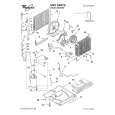
16. Fasten cabinet to window sill. Lower window sash firmly onto cabinet. Place a carpenter�s level inside the cabinet and make sure cabinet is level side-to-side. Then drill starter holes into the cabinet base and the window sill. Use roundhead wood screws (H) to fasten cabinet to window sill, but do not tighten the screws. 17. Make sure cabinet has proper outward slope. Place carpenter�s level in the right side of the cabinet. There should be a l/2 bubble tilt (W [6 mm]per foot [30.5 cm]) toward the outside. Repeat for left side of cabinet. The tilt to the outside is needed for proper drainage. 18. Attach 2%� (63.5 mm) seal strip (I) to inside of cabinet. Make sure the seal strip is flush with the front edge of the cabinet. This seal strip provides a seal between the air conditioner base and the cabinet.
19. Assemble the outside support. Attach the vertical supports (J) to the angled supports (K). Use the round-head bolts (L), flat washers (M), lock washers (N) and the nuts (0) for attachments. Then attach these supports to the bottom of the cabinet, but DO NOT tighten the bolts at this time. Attach the wall rail (P) to the bottom of the supports and slide the support assembly toward the house until the wall rail presses firmly against the wall. Check that you have the % bubble tilt to the outside. This is needed for proper drainage. Now tighten all bolts. Tighten angled support bolts last so wall rail fits tightly against the house. NOTE: If your house is constructed of materials that could be damaged by the wall rail, fasten a board or other protective material to the wall rail so that it is between the wall rail and the house.
continued
on next page 11
|
|
|
> |
|