|
There are currently no product reviews.
 ;
Being a user of older radios of many kinds, preferring them over more modern rigs, this manual was invaluable in the programming of my two. I now know for certain what the assorted buttons functions are, and am very grateful to have found this excellent site. Many thanks for your assistance, Tony.
 ;
Clear and easy to read. All details as expected. Price acceptable , and quick delivery.
;
Quick response and exactly what I was looking for and at a great fair price!
;
5 star quality on these downloadable manuals. Easy to read and all the information is there. A must when doing a custom install or needing to service your precious old school electronics.
;
So usefull to make my installation a breeze. 5 stars on quality.
HOW TO USE THE LOW TEMPERATURE COMPARTMENT
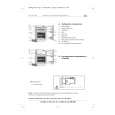
If installed, the star low temperature compartment may be used to store frozen products for the time indicated on the packaging. When purchasing deep-frozen foods, check the following: � That the packaging is intact, since the food may have deteriorated. If the package bulges or is marked by damp patches, the product has not been correctly stored and may have partially thawed. � Purchase deep-frozen foods last and use insulated bags for transportation. � Place items in the low temperature compartment as soon as you get home. � Consume partially thawed food within 24 hrs. � Avoid temperature variations as much as possible. Observe the �best before� date on the packaging. � Observe the instructions for preserving deepfrozen foods written on the packaging. How to make ice-cubes � Fill the ice-tray 3/4 full of water and place it in the bottom of the low temperature compartment. If the ice-tray sticks to the bottom, do not use pointed or sharp instruments to detach it.
HOW TO DEFROST AND CLEAN THE LOW TEMPERATURE COMPARTMENT
To maximise performance, defrost the low temperature compartment at least twice a year, or when the layer of ice on the walls reaches 3 mm thickness. Defrost the compartment when the contents are low. 1. Open the door and take out all food items, wrapping them in newspaper and placing them together in a cool place or in an insulated bag. 2. Unplug the appliance from the mains. 3. Leave the door open to allow the frost/ice on the compartment walls to melt. 4. Remove the defrost water with a sponge. 5. Clean with a sponge soaked in a solution of lukewarm water and neutral detergent. Do not use abrasive substances. 6. Rinse and dry thoroughly. � Note: to avoid causing irreparable damage, do not use pointed or sharp metal instruments to scrape off ice and do not artificially heat the low temperature compartment.
11
|