|
|
|
Categories
|
|
Information
|
|
Featured Product
|
|
|
 |
|
|
There are currently no product reviews.
 ;
The manual was complete and of great quality. Originally a tri-lingual file, I first received only one language. After a note to owners-manuals.com, I quickly received the remaining languages... Great service, definitely worth it.
;
Thank you for providing this manual and at low cost.
The Philips scope is of excellent quality, longevity and build and had a couple of faults
when it was passed to me. Having the CCT diagrams is a blessing.
I have fixed the problems and also modded the scope to my requirements.
I have built a 24v Li-Ion pack for portable use from old but good laptop batts.
it is working beautifully and I am well pleased. Keep up the good work Guys.
 ;
manual was very helpful in learning how to propery use my washer. I could not find this manual anywhere else.
;
Awesome quality manual. You really saved my bacon with this one. Was looking for some specific information with regards to my "new" vintage VCR that didn't come with the owners manual. This site is truely a goldmine of available manuals. The quality of the scans are top notch.
Thank-you so much for this awesome manual. If you're looking for this Sony SL-HF400 owners manual, this is the one you NEED to buy. Definitely worth the money.
;
The manual was made available promptly. I is a clean scan of the original. I had no problem downloading it. The scan was well centered and cleanly formatted. It is as good a product as can be had without being the original document.
Transfert et visualisation de photos
Attention!
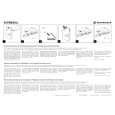
Windows 98 uniquement: Avant la toute première connexion de l'appareil photo pour charger l'appareil/ pour le transfert de fichiers, placez le CD-ROM fourni dans le lecteur de CD-ROM de l'ordinateur et installez les pilotes requis. Une fois l'appareil photo connecté au port USB de l'ordinateur, le système d'exploitation reconnaît le KEY comme périphérique de stockage de masse USB. Les fichiers images du KEY sont enregistrés au format JPEG comme suit: \DCIM\100PHILIPS\KEY7xxxx.jpg (modèles KEY 007) \DCIM\100PHILIPS\KEY8xxxx.jpg (modèles KEY 007) xxxx représentant le numéro du fichier JPEG (de 0001 à 9999) Une fois les fichiers transférés sur l'ordinateur, vous pouvez exécuter les opérations classiques telles que copier, supprimer et renommer les fichiers. Transfert et visualisation de photos 1 Retirez le capuchon du connecteur USB. 2 Branchez le connecteur USB de l'appareil photo sur le port USB de l'ordinateur. � Le voyant POWER se met à clignoter. 3 Pour de plus amples informations, consultez les pages du présent chapitre relatives à l'utilisation respective de l'appareil photo avec les ordinateurs Windows et Macintosh. 4 Une fois la visualisation terminée, débranchez l'appareil photo du port USB de l'ordinateur. 5 Replacez le capuchon du connecteur USB.
15
|
|
|
> |
|