|
|
|
Categories
|
|
Information
|
|
Featured Product
|
|
|
 |
|
|
There are currently no product reviews.
 ;
PDF Contains
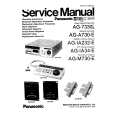
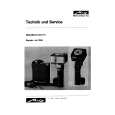
Technical Data, Mechanical data, Detailed Circuit diagram with components value, PCB layout. Actual PCBs Print. Component List, Spare parts code list and Input output detail. It cover LBB1211, LBB1212, LBB1213, LBB1216, LBB1217.
It is the actual Service Manual for SQ10
;
very good manual with clear electrical schemes. Very helpful to find wat was wrong inside my microwave.
 ;
Hi, thankyou for providing the Nordmende Globetrotter original manufacturer's repair manual. Quality is very good and sharp - the PDF file was comfortably small to download. The only question is: why did it take so long to become ready for download?? Many thanks anyway, I fixed the fault in the radio thanks to the circuit.
regards: Nick
;
This was super service.Ordered this manual and was reading the download an hour later
;
as always, rapid and efficient, very good and clear prints
details clearly visible keep going this way!!!!!!
Philips Semiconductors
Two-tone Linearity in a 900 MHz Silicon Bipolar Class AB Ampli�er
4 CONCLUSION
Application Note AN98026
Using the typical characteristics of a silicon bipolar transistor in the class AB mode, it is possible to improve IMD for medium and high output power levels by adding a series resistor in the base bias network. This simple and reliable method allows the power amplifier to be operated in the class AB mode, which increases amplifier and overall system efficiency considerably. The presented class AB amplifier shows an IMD performance of better then �32 dBc over a 40 dB dynamic range up to 10 W PEP. This performance makes it possible to use the amplifier in a feedforward system, meeting a �60 dBc IMD requirement. The trade-off is a slight increase in gain compression over the total dynamic range. A good selection of Icq and the series resistor value will give a usable compromise. 5 REFERENCES
1. Philips Semiconductors data sheet. BLV910 UHF Power Transitor. 2. P.B. Kenington, �Efficiency of Feedforward Amplifiers, IEEE Proceeding-G, Vol. 139, No. 5, October 1992, pp. 592-593. 3. Eid E. Eid, Fadhel M. Ghannouchi, Francois Beauregard, �Optimal Feedforward Linearization System Design,� Microwave Journal, Vol. 38, No. 11, November 1995, pp. 78-86. Korne Vennema received his B Eng degree in electrical engineering from the Hogere Technische School in Utrecht, the Netherlands in 1987. In March 1987, he joined Philips Semiconductors in Nijmegen, the Netherlands, where he worked as a development engineer on the design of RF power transistors. Since July 1993, Vennema has been with Philips Semiconductors, Slatersville, RI, as an RF application and product engineer.
1998 Mar 23
7
|
|
|
> |
|