Speedy confirmation to my order , with elaborate instructions .
Item Email , received immediately as desired by me.
A Pleasant & Satisfying Transaction.
I was searching for this manual at last i got it from this web
Text excerpt from page 4 (click to view)
INSTALLATION
If this appliance featuring magnetic door seals is to replace an older appliance having a spring lock on the door or lid, be sure to make that spring lock unusable before you discard the old appliance. This will prevent it from becoming a death-trap for a child. Fig. 2
Location
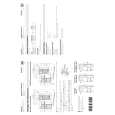
The appliance should be installed well away from sources of heat such as radiators, boilers, direct sunlight etc. Best performance is obtained with ambient temperature between +18°C and +43°C (class T); +18°C and +38°C (class ST); +16°C and +32°C (class N); +10°C and +32°C (class SN). The class of your appliance is shown on its rating plate. Make sure that there is nothing at the back, at the top and at the bottom of the appliance to obstruct air circulation. For a more ef�cient operation of the appliance the minimum distance between the top of the appliance and other overhanging kitchen furniture, if any, should be at least 100 mm (Fig. 1-A). The best solution is shown in Fig. 1-B (without overhanging kitchen furniture). The appliance sides may also be in contact with the kitchen furniture, provided that air can circulate free in the rear and top part. One or more adjustable feet mounted on the base of the appliance make it possible to set it perfectly level. For the models designed to be built in the furniture it is necessary to follow the speci�c instructions regarding building in. Fig. 1
A
45°
D039
Power connection
Before plugging in the appliance to the mains socket, check that the voltage and frequency indicated on the appliance�s rating plate are the same as those provided by your home power supply. A 6% �uctuation above or below rated voltage is acceptable. For operation at different voltages, a suitable transformer should be used. The appliance MUST be connected to an efficient earth or ground tap. The supply-lead plug in fact incorporates a special earth or ground contact for this purpose. If by any chance the sockets of your domestic wiring system are not earthed, the appliance must be connected to a separate earth or ground wire by a quali�ed electrician, in accordance with existing safety regulations. The manufacturer declines to accept any liability if this accident-prevention procedure is not followed. This appliance complies with EEC directive number 87/ 308 of 2/6/87 relative to radio interference suppression. This appliance complies with the following E.E.C. Directives: - 73/23 EEC of 19.2.73 (Low Voltage Directive) and subsequent modi�cations; - 89/336 EEC of 3.5.89 (Electromagnetic Compatibility Directive) and subsequent modi�cations.
A
100 mm min.
B
D194
Cleaning the appliance�s interior
Before using the appliance for the �rst time, wash all internal parts with lukewarm water and neutral soap so as to remove the typical «new» smell and then dry thoroughly. Do not use detergents or abrasive powders as these will damage the �nish.
Rear spacers
In the plastic envelope containing the Operating Instructions are also included two wall spacers to be �tted into the special openings provided on the back of the appliance. Push-�t the spacers into the openings, making sure that arrow (A) is positioned as per Fig. 2 and then turn the spacers through 45° until they lock in (arrow in vertical position).